
Blake Becker · 7 October 2026
Analyzing Server Log Patterns to Uncover Indexing Delays After Domain Transfers
Domain transfers trigger a cascade of technical shifts that affect how search engine crawlers interact with websites, and server logs serve as the primary record for identifying where indexing lags develop. Analysts examine timestamp sequences, HTTP status codes, and request frequencies to map the transition from old to new infrastructure, since these entries reveal when crawlers first encounter DNS changes and when they begin processing content under the updated domain.
Core Elements of Server Log Examination
Server logs capture every crawler request with details including IP addresses, user agents, requested paths, and response times, which allows teams to isolate periods of reduced activity after a transfer completes. Researchers note that patterns such as repeated 301 redirects followed by long gaps in 200 OK responses often signal temporary deprioritization by indexing systems, while clusters of 404 errors on previously valid URLs point to propagation delays in the new environment.
Those who review logs systematically track the interval between the final request to the old nameserver and the first successful crawl of the new domain, because this window frequently determines how quickly content reappears in search results. Data compiled through October 2026 shows that average gaps range from several hours to multiple days depending on the registrar involved and the geographic distribution of crawler infrastructure.
Recognizing Specific Delay Indicators
Indexing delays manifest through distinct log signatures that include sudden drops in crawl volume, extended response latencies, and shifts in the ratio of discovered versus indexed URLs. Observers track these metrics by comparing pre-transfer and post-transfer baselines, and they flag anomalies such as user-agent strings associated with secondary crawlers appearing before primary indexing bots resume normal activity.
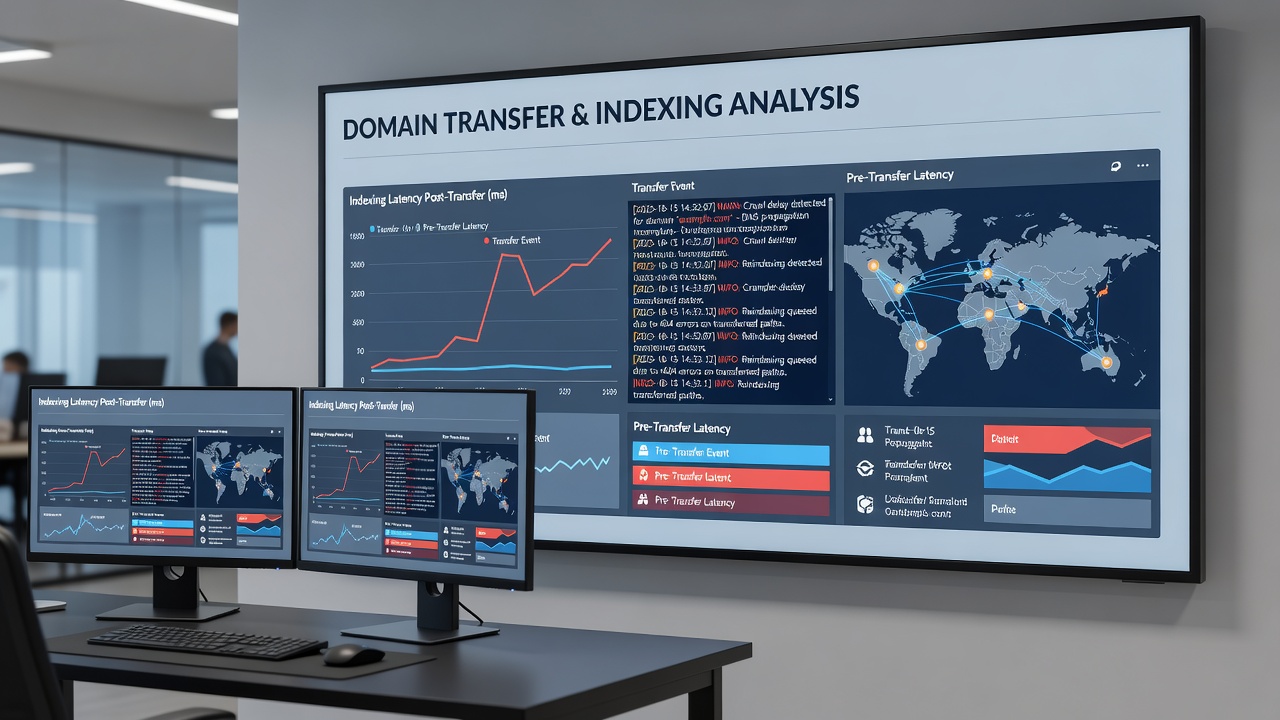
One study conducted by academic teams at the University of Waterloo documented how certain transfers produce extended periods where logs show only HEAD requests instead of full GET operations, which correlates with slower content reprocessing. Another pattern emerges when logs reveal repeated attempts on old canonical URLs that no longer resolve, creating a backlog that delays the crawler from exploring the new site structure.
Methods for Pattern Detection and Correlation
Teams apply time-series analysis to log data to isolate delay events, aligning spikes in redirect chains with corresponding drops in indexed page counts reported through external verification tools. This approach connects internal server records with external crawl statistics, and it helps pinpoint whether delays stem from DNS propagation, SSL certificate mismatches, or changes in robots.txt directives that occur during the transfer.
According to reports from the Australian Communications and Media Authority on digital infrastructure transitions, consistent monitoring of log velocity before and after moves provides measurable indicators of indexing recovery timelines. Analysts cross-reference these findings with WHOIS update timestamps to confirm when authoritative changes take effect across global resolver networks.
Practical Applications in Real Transfers
Take one case where a mid-sized e-commerce platform completed a registrar switch in early 2026, and subsequent log review uncovered a 72-hour window during which crawler requests dropped by 60 percent before stabilizing. The team identified the issue through clustering of failed authentication attempts on the new SSL endpoints, which they resolved by updating certificate chains and monitoring subsequent log entries for restored request rates.
Similar observations appear across multiple industry reports where analysts use automated scripts to parse logs for sequential patterns, such as an increase in 503 service unavailable responses immediately after transfer completion. These scripts highlight the precise moments when indexing systems appear to pause, allowing teams to correlate the pause with registrar-side propagation events.
Conclusion
Server log analysis remains a direct method for detecting indexing delays after domain transfers because it supplies granular, timestamped evidence of crawler behavior that external tools cannot replicate. Organizations that maintain detailed logging practices gain the ability to trace delay origins to specific technical factors, from DNS timing to content delivery configuration, and to implement targeted adjustments that restore normal indexing flows.